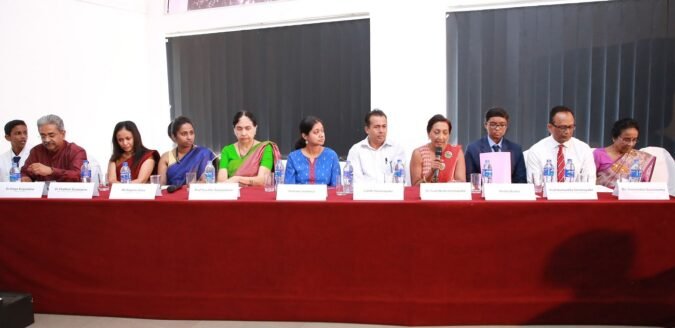
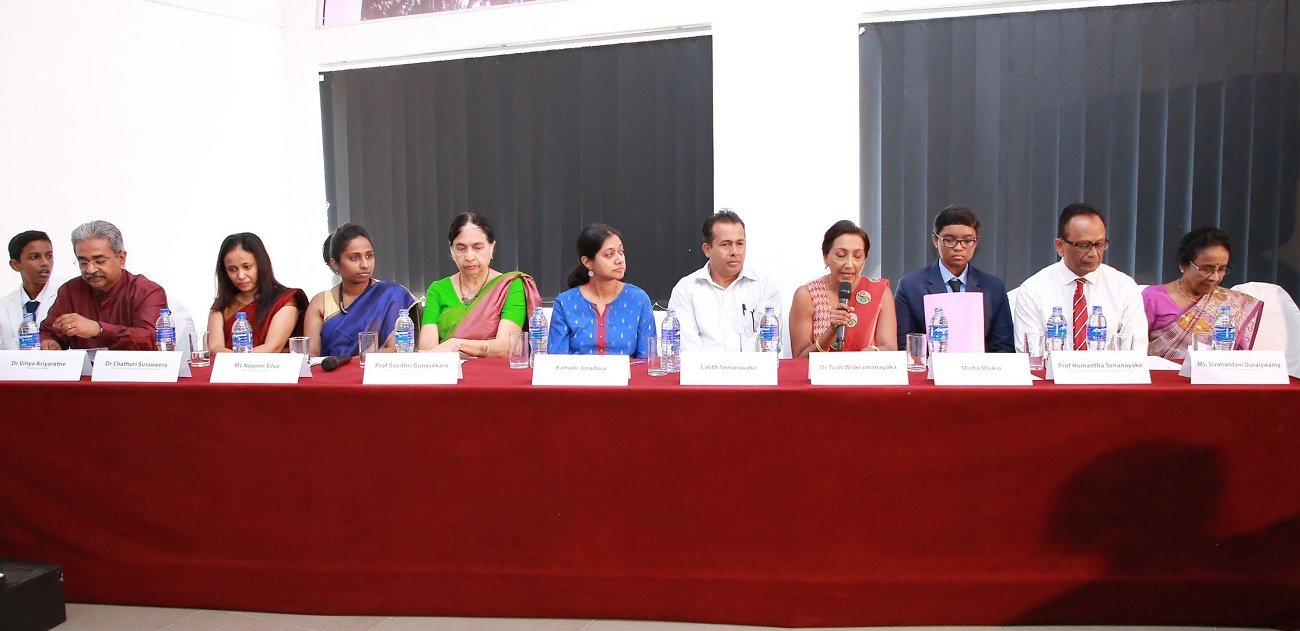
COLOMBO, March 2019: The ongoing campaign to end corporate punishment in schools in Sri Lanka is gaining more momentum, as a number of prominent personalities including academics and social change experts have stepped up their efforts to create awareness of the need to end this abhorrent practice.
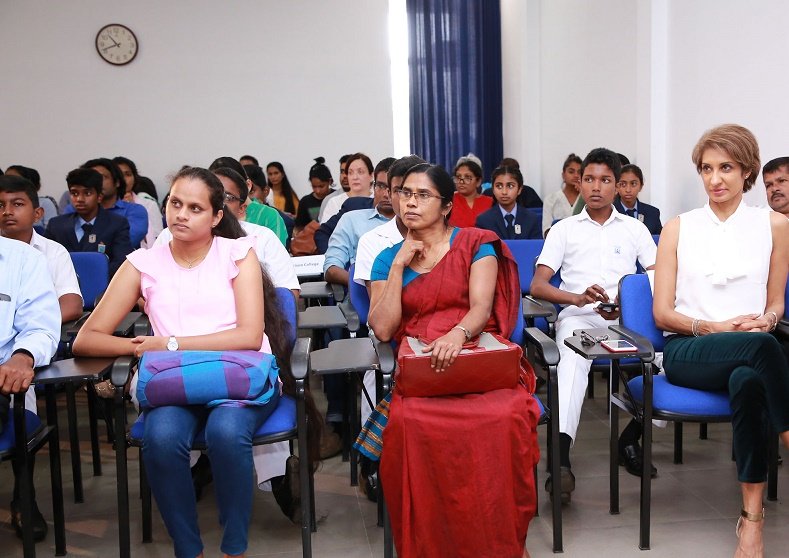
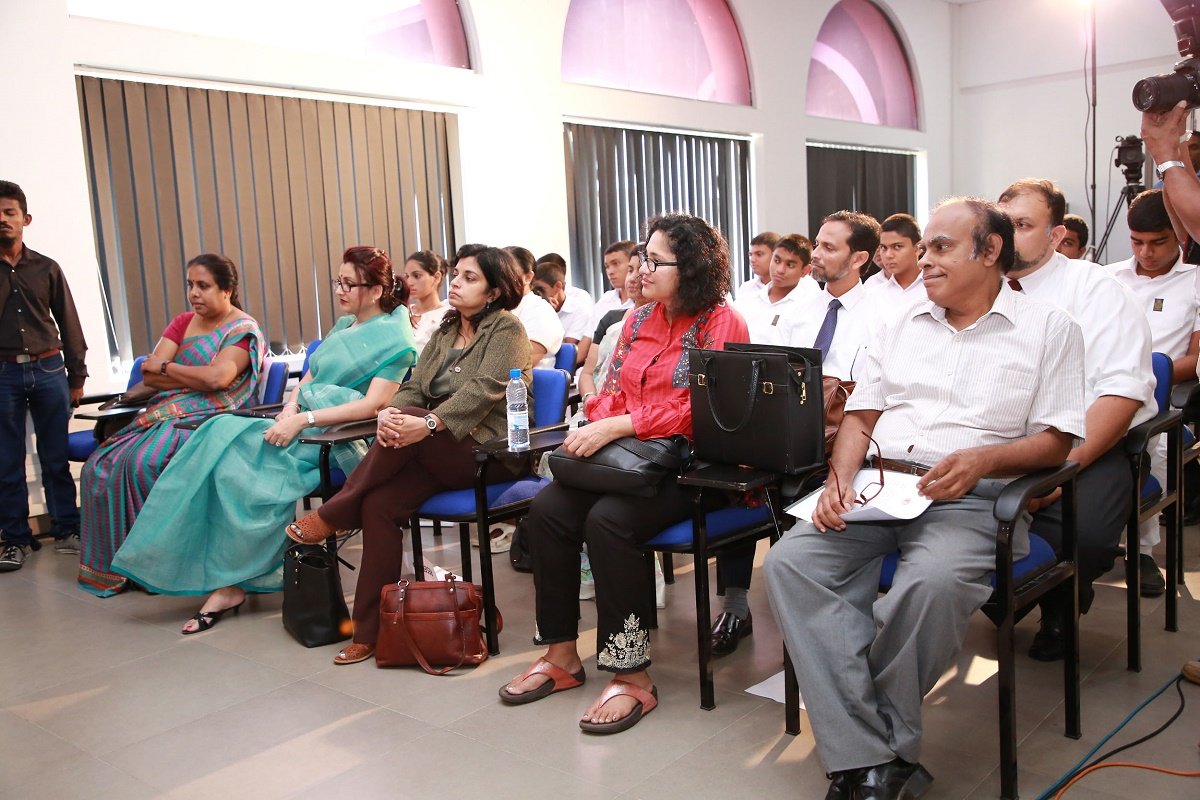
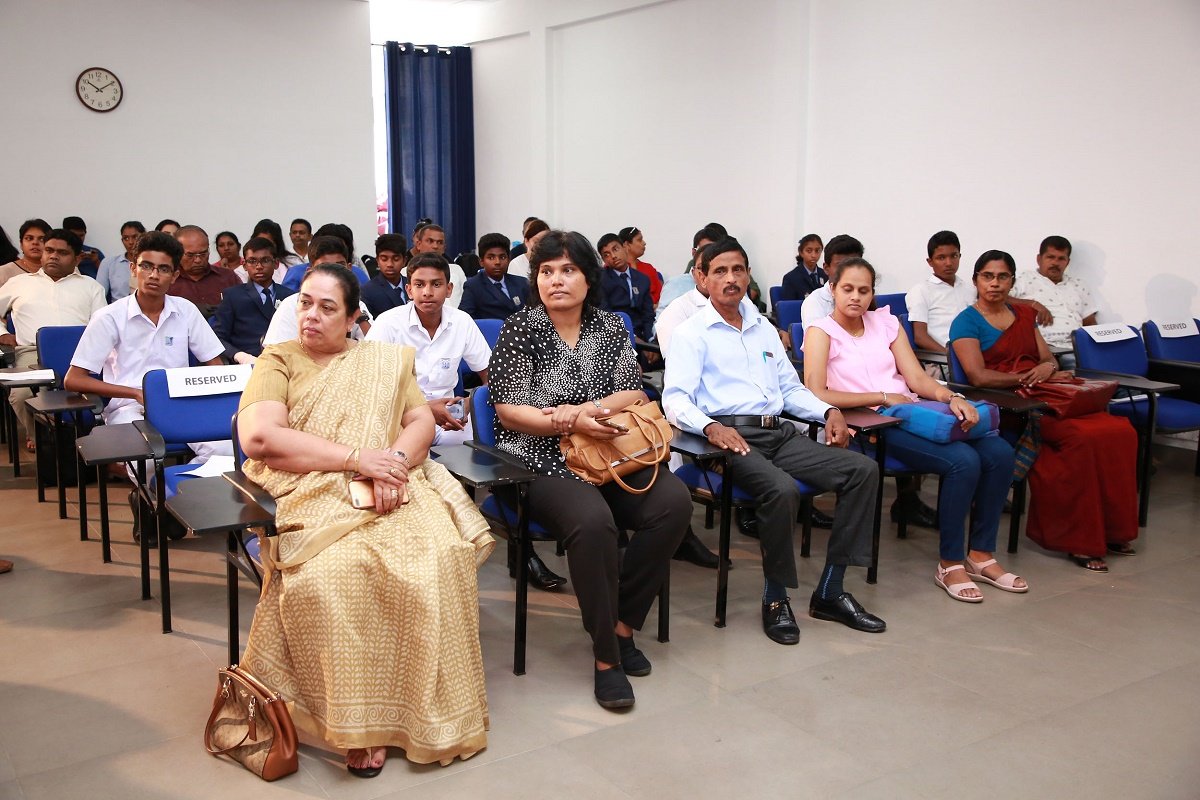
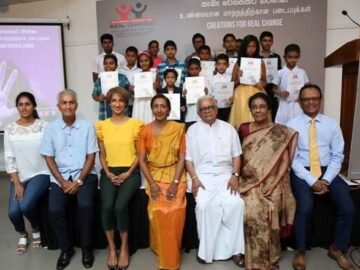
Speakers at a recent media conference titled “Progress for Real Change – Zero Tolerance on all forms of Violence” called for a sea change in both awareness and approach to help achieve the goals of the campaign – End Corporal Punishment in Sri Lanka – Vision 2020 (ECP2020) that is aimed at eliminating corporal punishment in schools.
ECP2020 is organised by Stop Child Cruelty (SCC), a Colombo-based social organisation in collaboration with the Presidential Secretariat, ‘Daruwan Surakimu’ and the Sri Lanka Foundation Institute, and is supported by leading personalities in the capacity of Patrons, as well as an Alliance of Professionals.
The campaign has also formulated the ‘Pentagon Proposals’ to secure a commitment from five key government stakeholders responsible for child protection to work collectively to end corporal punishment. The five stakeholders are – the President, Minister of Education, Minister of Children’s Affairs, Minister of Law and Order and Minister of Justice, who are entrusted with the responsibility of safeguarding the children of Sri Lanka.
The proposed first phase of the campaign is to ensure that a total ban on corporal punishment is institutionalised and enforced, implementing the National Child Protection Policy, regulating international schools, circulating all relevant circulars to all schools and making principals and teachers aware about them, establishing child protection officers in every school and making all parents aware of these appointments through specially-designed materials which can be distributed through schools, targeting students admitted to Grade 1 in 2020.
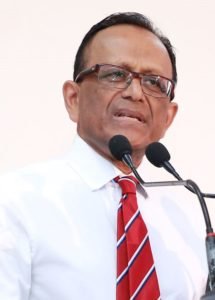
Addressing the conference, Professor of Obstetrics and Gynecology, Member of UGC, Hemantha Senanayake said that in domestic violence involving children, the child identifies the father as the authoritarian and when father hits mother the child automatically believes that is the correct thing to do.
“They think this is the norm. When the child enters school he or she faces more violence at the hands of the teacher or Principal. Again the child perceives that the teacher is the authoritarian and feels – ‘the teacher has the right to hit me’. One question I get most often from the offenders is ‘We are hitting the child out of love what is wrong with that?’. I wish to make it clear that I think this has nothing to do with love,” said Senanayake.
The indefatigable anti-corporal punishment campaigner, Dr. Tush Wickramanayaka, who is also the Chairperson of Stop Child Cruelty, said that that it was completely inappropriate to measure corporal punishment as little or severe and noted that the United Nations Committee on the Rights of the Child (UNCRC) defined corporal punishment as: “any punishment in which physical force is used and intended to cause some degree of pain or discomfort, however light”.
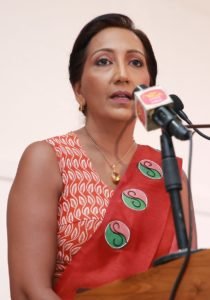
“It goes on to say that corporal punishment involves, verbal abuse, hitting or slapping the child with the palm or a more violent action with an instrument such as a cane or baton, and even brooms and similar implements which can inflict severe pain. But it could also involve other techniques such as pinching, pulling the hair or making the student kneel down or stand up. In the short term, in addition to physical harm there is also a significant degree of humiliation and mental hurt,” said Wickramanayaka.
“The Pentagon Proposal is to help bring swift justice to the child without any delay and done in a manner which is efficient. Here I wish to stress that the law must be effective and it must be enforced properly,” said Wickramanayaka.
She also stressed that beliefs and notions have to change in order to win the battle against corporal punishment and that this change has to come from all stakeholders – teachers, parents and children, among others.
“This is not to say that there should be no discipline when the child does something wrong. But we have to examine possible solutions to correct the child without using physical force and this is something we are working out with the Ministry of Education. We have to take positive action,” said Wickramanayaka.
She stated that they have been holding talks with the National Child Protection Authority to take the National Child Protection Policy to Parliament. Wickramanayaka said that satisfactory progress is being made, and she is very enthusiastic about a positive outcome for the children of Sri Lanka. She said that there is a circular issued by the Ministry of Education, that states that it is against the law to beat children. This circular needs to go to all schools.
“In foreign countries, wherever there are children, there are child protection officers. He or she is there to protect the children and knows what to do. They have to be specially trained. I also wish to say that children need to be empowered with knowledge and that knowledge is that no one has the right to hit them,” added Wickramanayaka.
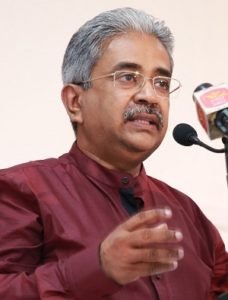
Sarvodaya Shamadana Movement President Dr. Vinya Ariyaratne said that it was very difficult to change corporal punishment, as it had been generalised not only in schools but also in society.
“Child cruelty is normalised in social media in a big way. Alumni associations, WhatsApp and Facebook groups share those stories,” he said, emphasising on the importance of non-violent communication, which can be used in the family, school and society. Dr. Ariyaratne claimed that Sri Lanka had failed to create a safer environment for children.
Lalith Senanayake, a parent said he experienced a nightmarish incident recently concerning his child.
“I am the father of a child who faced corporal punishment and it has left my child shattered. Such is my child’s trauma that the child is now under psychiatric treatment. The child was injured physically and had to experience degrading
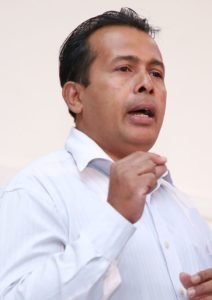
treatment. We went to the police and my poor child had to relive the experience again. Now, my child who once was full of life is now in a terrible state having lost all faith in humanity. I do not want this to happen to anyone again. My 13-year-old child was beaten badly at school to the point of injury,” said Senanayake.
Senanayake stressed that this culture of fear and intimidation has made his child a victim with the perpetrators thinking that they are not to be blamed. He feels that the police can play a role here, and although there are laws, their personal opinion stands in the way. Some police officers need to understand that no one is above the law.
Emeritus Professor of Law and former Vice Chancellor of the University of Colombo Savithri Gunasekara said the anguish of a parent is immense when corporal punishment against their child comes to light.

“UNICEF sponsored a major piece of research which indicated that corporal punishment at school is one of the major areas of child abuse. We have spoken about this for 30 years with no proper action, and if this programme can do something it will be a great achievement,” said Gunasekara.
She highlighted that a major area of concern for her is that while there is a system of law in the country why do such horrific cases of child abuse take place?
“In Buddhism, in the Sigalovada Sutta, it has been outlined how children are disciplined. And it is not through corporal punishment. It is done through proper speech. The child should be spoken to compassionately. There was a time when Sri Lankan society upheld these values. Robert Knox has said about Sri Lankans that ‘their anger does not last long. Seldom do they beat even a slave’. In ancient Sri Lankan society such values were given great priority,” explained Gunasekara.
“The state and family need to take responsibility for the child. If such an environment is not created the child becomes a victim of abuse. We must never lose faith in the system of law because a system of law is essential in a country. It facilitates good morals,” said Gunasekara.
Senior Lecturer in Psychiatry, Faculty of Colombo, Dr. Chathuri Suraweera stated that child abuse is not given enough attention the way female rights and animal rights are given prominence.
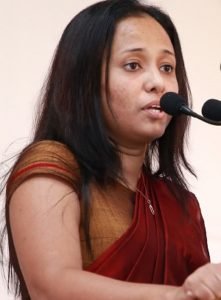
“However spare a thought for the teacher who needs to control 30 – 40 students in the class. There are options, however. A child need not be beaten. A teacher cannot give more of her/ his time to an individual student because there are so many children. Some children are very naughty. They are impulsive and emotional. One proposal I wish to state is increasing the number of teachers in the classroom like in other countries. We also need to examine whether the child has learning disabilities,” said Suraweera.
“A child can come from a background where someone in the family is alcoholic or aggressive. What we need is positive parenting. We need to make the family a place of protection. If the child does not undergo harm from family members the child will not exhibit disruptive behaviour in the classroom.
“The child needs to be associated with peaceful forms of expression such as aesthetics, music and outside interests. Reading books can help the child form a well-rounded personality. I also feel that the child should not be pressurised to achieve certain goals. The family and teachers need to change their approach. But the most important solution is giving them love and time,” explained Suraweera.
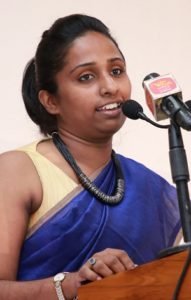
LEADS Manager Advocacy Nayomi Silva said that out of 9,512 complaints reported to the National Child Protection Authority (NCPA) from 2013 to 2018, over 2,413 complaints were incidents of cruelty against children. She said that there is no information whether all of 9,512 complaints have been investigated and court cases filed against the perpetrators.
Citing the contradictory sections in the Penal Code and the other laws related to children on corporal punishment, she said that the contradictory nature of the existing legal system had created some loopholes.
“Having contradictory laws is more dangerous than having no laws. This situation makes parents helpless when they seek justice. Different organisations and campaigns have tried to bring changes, especially to introduce the juvenile justice administration system to the existing laws for over 40 years, but they are yet to be implemented,” she said, stressing on the need for political pressure to change laws related to children.
“As parents, you have a great responsibility and power to pressurise the respective politicians to include child protection in their manifestos and also to vote for those who have concerns about children,” she said.
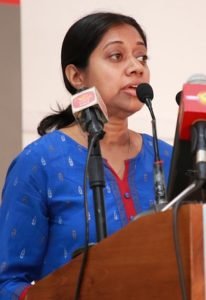
Citing statistics from some studies, Shanthi Margam Executive Director Kamani Jinadasa revealed that over 41% of children had undergone physical harassment and out of this over 75% had been subjected to CP and nearly 90% had faced mental aggression.
She said that research had shown that children, especially boys, who were subjected to physical harassment and abuse were involved in domestic violence later.
“No one will have violent behaviour automatically and there are several reasons like getting harassed or abused, especially at homes and in schools, that would transfer the violent experience back to society when they grow up,” she explained.
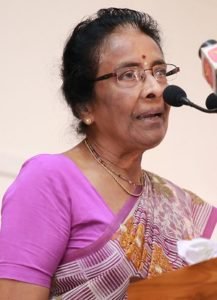
Jinadasa said that it was shocking to see that over 97% of rape cases do not come before the legal process as the victims tend to suffer silently.
Hindu Women’s Society President Sivanandani Duraiswamy proposed a vote of thanks that endorsed zero tolerance for violence against children.



 📌 General Disclaimer: This resource guide is provided for informational purposes only and does not constitute legal, financial, medical, or immigration advice. Information was accurate at the time of publication but may change. Always verify details with the relevant official authority before making decisions. Inclusion of third-party organisations, services, or platforms does not constitute endorsement by this website.