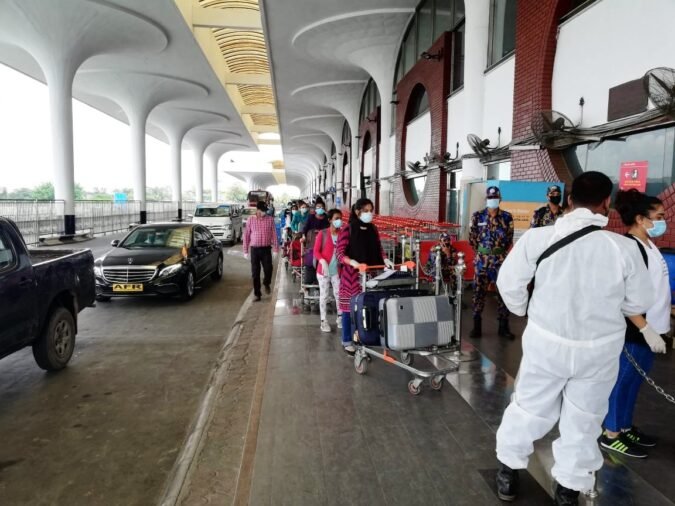
COLOMBO: Foreign Secretary Ravinatha Aryasinha has observed that despite its immediate gloom, the present situation has been an eye opener in many respects that could help correct structural, procedural and human interface incongruities in Sri Lanka’s labour migration. It also presents an opportunity for Sri Lanka to re-orient foreign employment in a post-Covid-19 world, sensitive to the ground realities in both Sri Lanka and the migrant labour receiving countries, so that the future footprint of Foreign Employment Sri Lanka will provide the world – though probably Smaller, could be Smarter and more Sustainable.
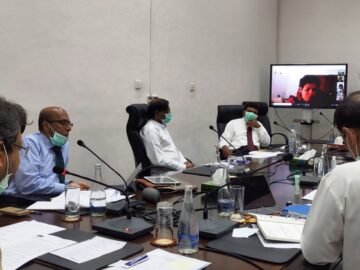
The Foreign Secretary made these observations when he addressed the 33rd Annual Session of the Organization of Professional Associations (OPA) via a video link, on the theme “The Role of Foreign Employment in the Economic Revival of Sri Lanka; Challenges and Opportunities”.
Prime Minister Mahinda Rajapaksa inaugurated this year’s Annual OPA Session held on 27-28 June 2020 as a Digital Conference, on the theme ‘Bounce Back–Disasters and Opportunities”.
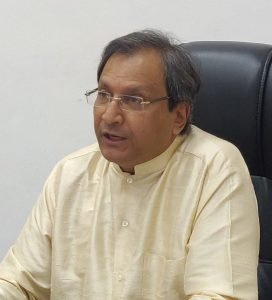 Secretary Aryasinha said the Covid-19 crisis had exposed the significant number of Sri Lankan migrant workers abroad who are undocumented/irregular, and as a result are ineligible to avail of medical and other benefits in their host countries, and are also vulnerable to deportation if identified. Also many of them non-registering with the SLBFE was a matter of concern. It is believed that some, who might have originally registered at the point of leaving the country, might not have subsequently renewed their registration. He urged that they register so that they enjoy the benefits of an expanded social safety net, as successfully practiced by migrant workers in countries like the Philippines, where the percentage of registered migrant workers is 96.8%.
He said that even for those who have legal status, a consequence of Covid-19 has been the shrinking of the employment market, particularly with the increasing cases of unemployment, loss of contracts, non-extension of work permits and halting of temporary freelance work, which have left many of them largely destitute. It was noted that this could lead to a serious shortfall in the numbers of migrant workers who will leave for work this year and in turn a drop in worker remittances. In 2019, migrant worker’s remittances to foreign exchange earnings was 25.5 %, while its contribution to Sri Lanka’s GDP was approximately 8%.
Secretary Aryasinha said the present situation could help in building more forward looking and resilient policies and strategies that can ensure ‘sustainable and just economies’. He noted that Sri Lanka which has had the opportunity to design and provide input on certain crucial regional modalities within the Colombo Process and the Abu Dhabi Dialogue – which brings together the Asian migrant labour sending countries, and also connects them with the labour receiving countries in the GCC, could together with the ILO and IOM, also play a greater role in the post-COVID scenario for the benefit of the migrant workers, as well as the sending and receiving countries. This would include;
– ensuring the outward flow of a better trained and skilled migrant worker, one who will while able to earn more, is less likely to face the vulnerabilities presently encountered by the average Sri Lankan migrant worker, particularly the unskilled workers,
– combine market research platforms to generate vocational training programmes that will serve future job markets and economic demands in countries post Covid-19, and recalibrate to inspire a work force that meets that demand,
– re-formulate our education systems, and re-orient students to be a rich human resource pool for future labour markets,
– expedite action in enhancing cheaper, safer and faster modes of remittance flows,
– ensure that ‘migrant health’ becomes a cornerstone in the management of migrant populations.
The Foreign Secretary emphasized that the recent crisis has helped break the silos and ensure better intra-governmental coordination in dealing with matters concerning migrant workers – both in Colombo, as well as in the destination countries. He said, “this augurs well for future collaborative efforts as an essential element that has helped us to thrive in this unprecedented circumstance to deliver as one. We should now look forward to further strengthening and build in a strong protocol for the ‘whole of government’ approach on issues concerning foreign employment”.
Meanwhile, a large coalition of civil society organizations and global trade unions have launched a call for an urgent justice mechanism for migrant workers repatriated as a result of the COVID-19 pandemic.
Globally, the International Labor Organization (ILO) estimates that 195 million jobs will be wiped out as a result of the pandemic. In the Middle East region alone, an estimated 5 million jobs will be lost, with many of those jobs held by migrant workers. Since the start of the pandemic, more than 200,000 migrant workers have been repatriated to Asian countries of origin from different parts of the world. This number is expected to rise exponentially over the next few months.
Without proper controls, employers might take advantage of mass repatriation programs to terminate and return workers who have not been paid their due compensation, wages and benefits. Millions will be repatriated to situations of debt bondage as they will be forced to pay off recruitment fees and costs, despite returning empty handed.
Without ensuring that companies and employers are doing their due diligence to protect and fulfill the human rights and labour rights of repatriated migrant workers, states across migration corridors become complicit in overseeing procedures where millions of workers will be returning without their earned wages or workplace grievances being heard, nor seeing justice in their situation.
“Extraordinary times call for extraordinary measures,” said William Gois, Regional Coordinator of Migrant Forum in Asia. “Millions will suffer if this crime goes unnoticed. We cannot see this as collateral damage brought by the pandemic.”
It should be a priority to guarantee that all repatriated workers with legitimate claims are able to access justice and some kind of compensation. The appeal which civil organizations and trade unions have launched together calls on governments to urgently establish a transitional justice mechanism to address grievances, claims and labour disputes of repatriated workers who have lost their jobs as a result of the pandemic.
Many migrant workers have reconciled themselves to the situation of wage theft in the form of unfair or unpaid wages for months and years before the COVID 19 pandemic. They have accepted it as their fate and refrained from complaining lest they lose their jobs, or, worse still, live under the fear of their status being made undocumented.
“The pandemic must not stifle our will, our spirit and commitment for justice,” Gois said. If we are to ‘Build Back Better’, we cannot continue to turn a blind eye to the issue of wage theft that has been persistent across migration corridors for years, and will be unprecedented in the case of repatriated migrant workers in the COVID 19 pandemic.

 📌 General Disclaimer: This resource guide is provided for informational purposes only and does not constitute legal, financial, medical, or immigration advice. Information was accurate at the time of publication but may change. Always verify details with the relevant official authority before making decisions. Inclusion of third-party organisations, services, or platforms does not constitute endorsement by this website.